The “Diamante” Violin: A Contemporary Instrument That Matures with Time
From my workshop in Cremona, I recently had the pleasure of welcoming back a violin I made in 2014: the “Diamante”, part of a limited collection inspired by precious stones.
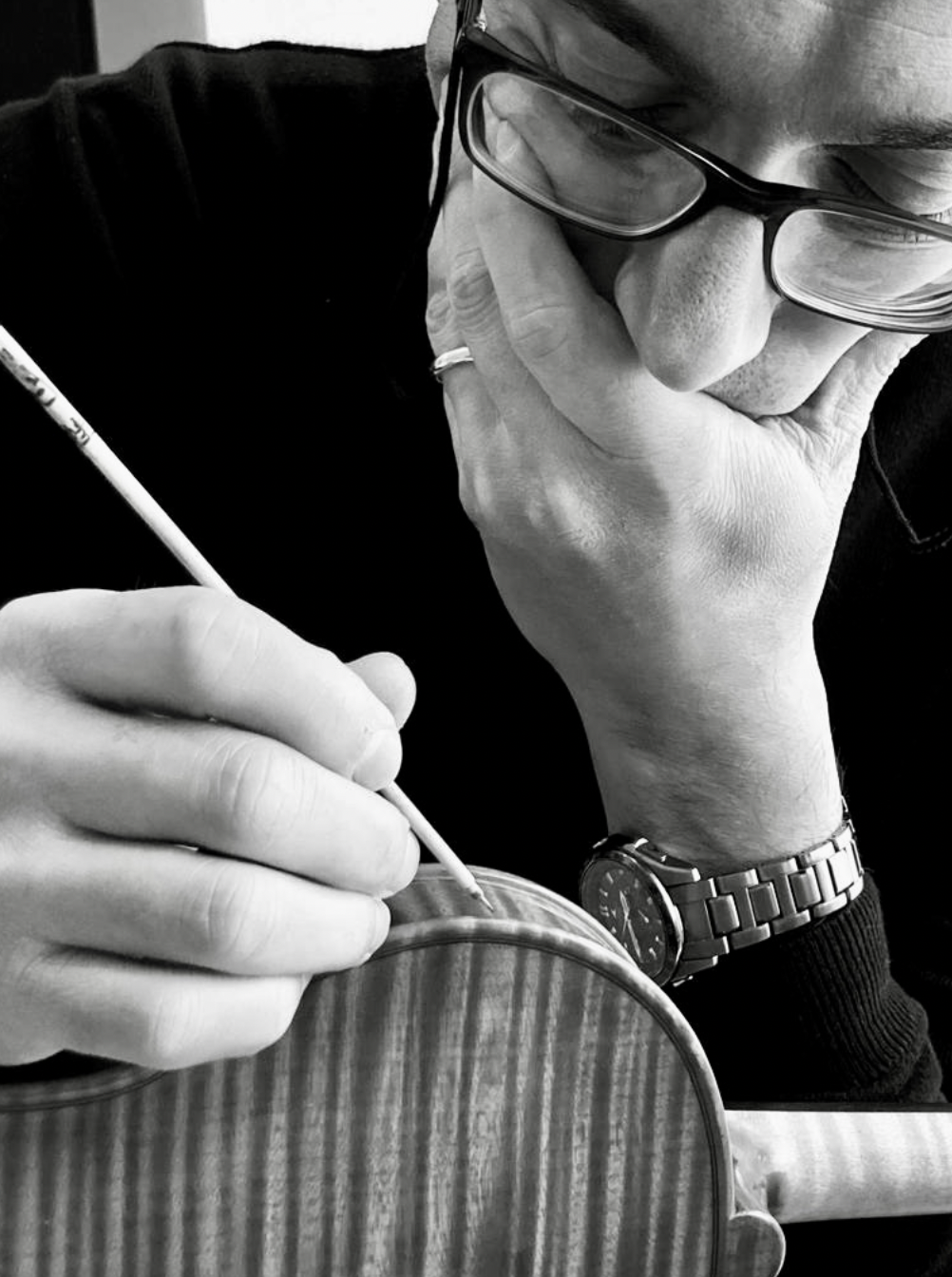
The instrument returned for an acoustic adjustment and a small varnish retouch. Seeing one of my violins again after many years is always special, because it allows me to observe something that cannot be seen when an instrument first leaves the workshop: how it has changed through time and playing.
A violin that has developed its own character
The “Diamante” had been carefully preserved by its owner, yet the years had left their mark in a beautiful way.
The varnish had developed a light, natural patina, giving the surface greater depth and character without hiding the original work beneath it.
This is one of the aspects I find most fascinating about a contemporary handmade violin.
A new instrument does not remain frozen in the moment it is completed. It continues to evolve visually and acoustically, gradually acquiring a history of its own.
The relationship between maker and instrument
Every violin, viola or cello I make remains familiar to me.
I remember the wood, the model, the varnish and many of the choices made during construction. When an instrument returns to my workshop years later, I can compare those memories with what the instrument has become.
It is also one of the advantages of a contemporary instrument: the relationship between maker, player and instrument can continue long after delivery.
Adjustments can be made with full knowledge of how the instrument was originally conceived and built.
Tradition that continues to live
The “Diamante” was created in Cremona, within a violin-making tradition that has developed here for centuries.
But for me, tradition does not mean creating an object that only looks towards the past.
A new violin begins with classical knowledge and craftsmanship, but its history belongs to the musician who plays it.
More than a decade after I made it, the “Diamante” is no longer simply the violin that left my workbench in 2014.
It has matured through music, use and time — and that is perhaps one of the most beautiful qualities a contemporary instrument can have.