Modern or Antique Violin? A Violin Maker’s Perspective
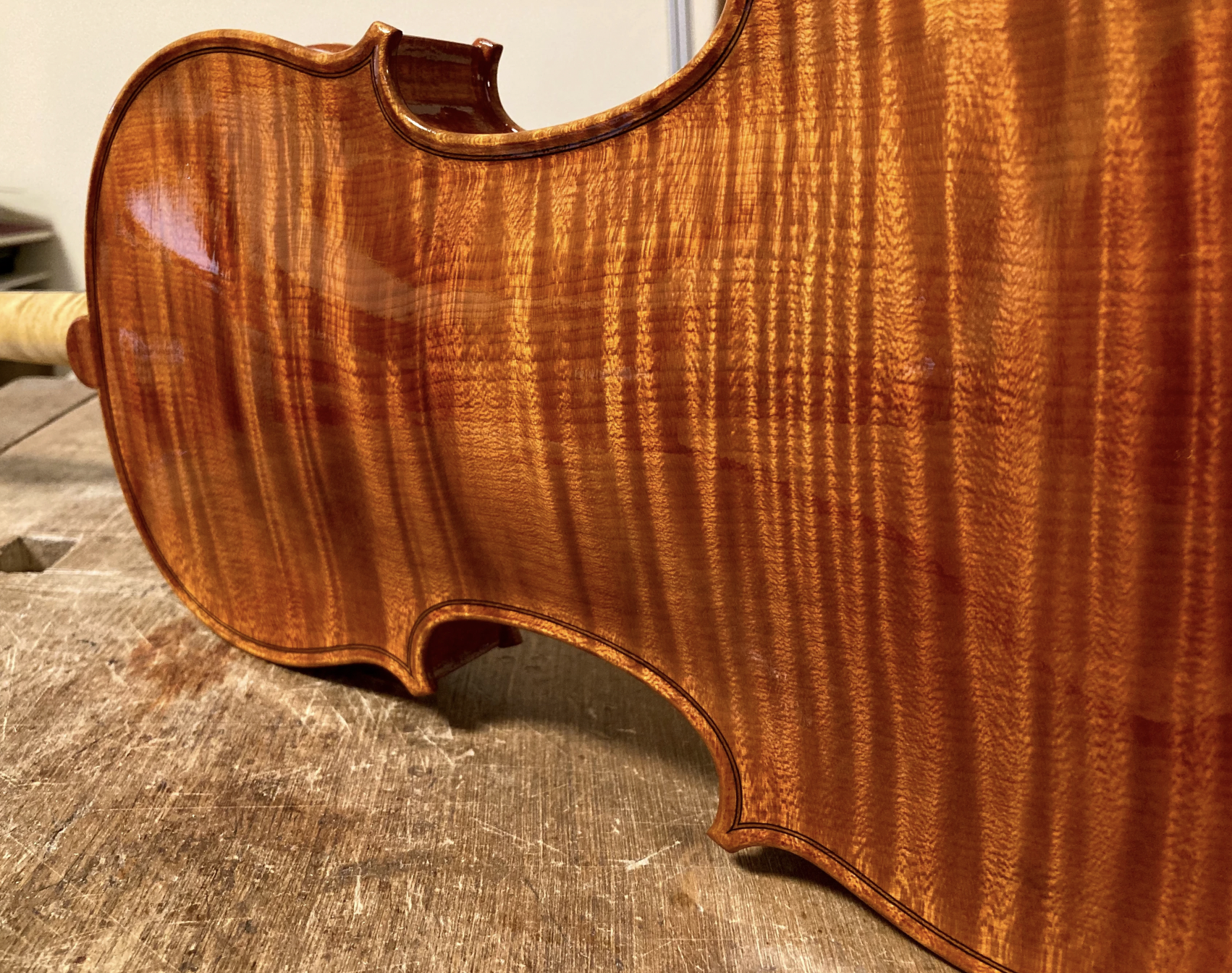
From my workshop in Cremona, I am often asked whether it is better to choose an antique violin or a contemporary one.
There is no simple answer. A fine antique instrument can have extraordinary historical, artistic and musical value. I have great respect for these instruments, which remain an essential source of knowledge for every violin maker.
But when choosing an instrument to play every day, age is only one part of the story.
The more useful question is: which instrument gives the musician the response, reliability and freedom they are looking for?
The advantage of starting from the beginning
One of the most interesting aspects of a contemporary violin, viola or cello is that its story begins with its player.
There are no unknown repairs, old cracks or structural alterations hidden in its past. The maker knows exactly how the instrument was built, which materials were used and how it has developed from the first day.
This creates a continuity that can be particularly valuable over time. As the instrument settles and changes through playing, the maker can follow its evolution and make adjustments when necessary.
For a musician, this direct relationship can be just as important as the instrument itself.
Does an instrument need to be old to sound good?
This is probably one of the most persistent ideas surrounding stringed instruments.
Age certainly influences an instrument, but it does not work alone.
The choice of wood, the model, arching, thicknesses, bass bar, varnish and setup all contribute to the final result.
A well-made contemporary violin can offer clarity, projection, responsiveness and a broad range of colours from the beginning, while continuing to develop with use.
For me, this is particularly fascinating: creating an instrument whose personality is already recognisable, but which still has a musical life ahead of it.
Built around the musician
There is another possibility that belongs almost entirely to contemporary violin making: the dialogue between musician and maker.
When I build an instrument in Cremona, I can take into account the player’s preferences — the type of response they are looking for, the tonal character, the model, dimensions and even certain aesthetic choices.
This does not mean designing a violin as if it were an industrial product made to specification. Wood and acoustics always have their own voice.
But it does mean that the instrument can be created with a particular musician in mind from the very beginning.
That relationship between maker, instrument and player is, for me, one of the most meaningful aspects of making a new instrument.
Tradition without copying the past
My work is deeply connected to the classical Cremonese tradition.
I study and use models inspired by Stradivari, Guarneri and other historical Cremonese makers, because their instruments still offer extraordinary lessons in proportion, construction and sound.
But I do not believe the purpose of contemporary violin making is simply to reproduce an antique instrument.
Every piece of spruce and maple is different. Every musician is different. A new instrument should therefore have the possibility to become something of its own.
The tradition gives us the language; the maker still has to find the voice.
Old or new?
An antique violin can offer history, rarity and the fascination of a long musical past.
A contemporary violin offers something different: the opportunity to begin that history yourself.
It can provide excellent structural condition, direct support from the maker, the possibility of personalisation and a sound created with the demands of today’s musician in mind.
So I would not choose an instrument simply because it is old or because it is new.
I would choose the instrument that responds immediately, gives freedom under the bow and makes the musician curious to discover how far it can go.
And sometimes, one of the most exciting things about a new instrument is knowing that its best years may still be ahead of it.