Why Is Cremona the City of Violins?
Cremona is a small city in northern Italy, but in the world of violin making its name carries extraordinary weight.
For centuries, musicians, collectors and violin makers have associated Cremona with instruments by Amati, Stradivari and Guarneri del Gesù. Their work helped define the classical Italian violin and established a tradition that still influences violin making today.
But why Cremona?
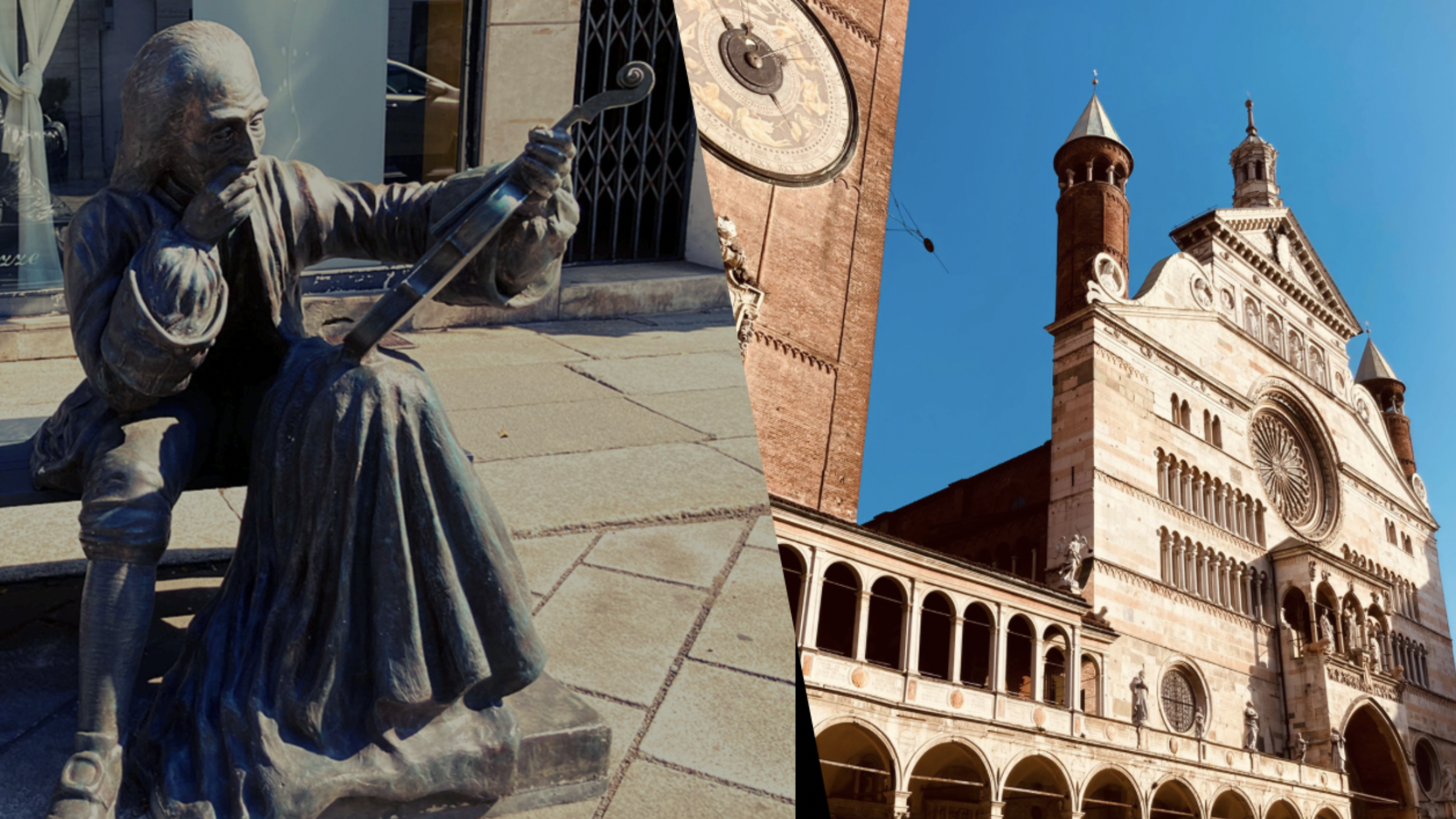
Where the Cremonese violin-making tradition began
The decisive period began in the 16th century with the Amati family.
Andrea Amati is generally regarded as one of the founders of the modern violin family. His descendants continued to refine the design and construction of violins, violas and cellos, creating a strong local tradition that would later influence the great Cremonese makers of the 17th and 18th centuries.
Among them, Antonio Stradivari and Giuseppe Guarneri “del Gesù” became the most famous.
Their instruments are still studied today for their proportions, arching, construction, varnish and, of course, sound.
Why did violin making flourish in Cremona?
There is probably no single explanation.
Cremona had a strong musical and artistic culture, skilled craftsmen, and a network of workshops in which techniques and knowledge could develop over generations.
Its geographical position also helped connect the city with trade routes and the supply of materials.
But perhaps the most important factor was continuity.
Violin making was not the work of one isolated genius. It became a local culture, passed from one generation to the next, with makers learning from existing instruments while developing their own ideas.
That combination of tradition, competition and individual interpretation helped make Cremona unique.
Cremona today
Cremona is not only a city of historical instruments.
Violin making is still very much alive here.
The city is home to an international violin-making school, the Museo del Violino, numerous workshops and makers from many different countries who have chosen Cremona as the place to learn and practise this craft.
In 2012, the traditional violin craftsmanship of Cremona was inscribed by UNESCO on the Representative List of the Intangible Cultural Heritage of Humanity.
This recognition is important, but what matters even more is that the tradition continues to be practised every day.
Tradition is alive only if it continues
For me, working as a violin maker in Cremona means being surrounded by an extraordinary history.
The instruments of Stradivari, Guarneri and Amati remain an essential source of study and inspiration.
But Cremona should not become only a museum of its past.
A living tradition must continue to evolve.
When I make a violin, viola or cello in my workshop, I work with the knowledge and principles that developed here over centuries, but the goal is to create an instrument for a musician today.
Every piece of wood is different. Every player is different. And every new instrument should have the opportunity to develop its own voice.
That is perhaps why Cremona is still the city of violins: not only because some of the greatest instruments in history were made here, but because violin making is still being practised, studied and reinvented here every day.